
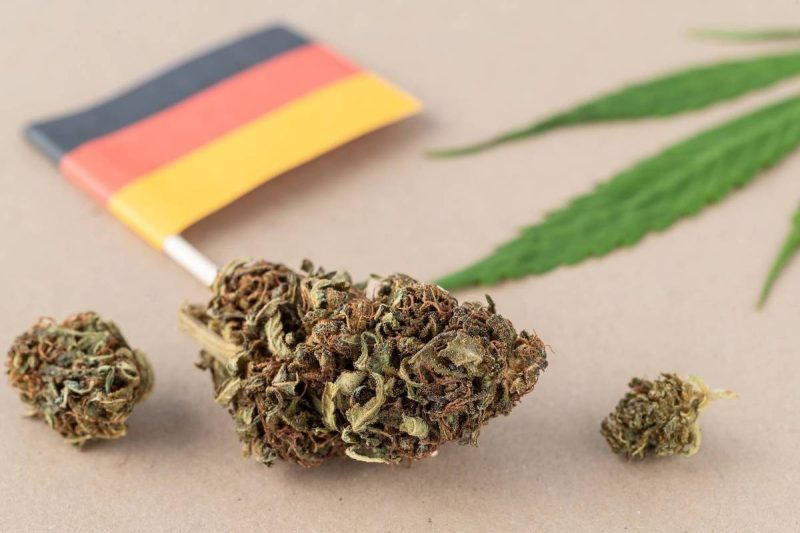
Germany’s medical cannabis market exploded in 2025, with prescriptions surging 3,300 percent from March 2024 to December 2025, per Bloomwell Group’s Cannabis Barometer.
That’s according to Niklas Kouparanis and Dr. Julian Wichmann, co-founders of the Bloomwell Group, a Frankfurt-based cannabis company that operates Germany’s largest digital platform for medical cannabis.
According to the report’s authors, this environment is setting the stage for Germany’s medical cannabis market to quickly become one of the largest in Europe.
Reform fuels cannabis growth in Germany
Bloomwell’s review, built on anonymized real-world data from hundreds of thousands of self-paying patient prescriptions filled via its app, e-prescriptions and partner pharmacies from January 2024 to December 2025, shows Germany’s medical cannabis market saw a 3,300 percent surge in prescriptions by December 2025 compared with March 2024, the final month before medical cannabis was reclassified and removed from the country’s list of narcotics.
“What we’re seeing is a fundamental shift in patient access to legally prescribed, medically supervised and digitally accessible cannabis following regulatory reform,” said Kouparanis.
The country’s Cannabis Act (CanG) removed cannabis from its Narcotics Act (BtMG) and enacted the Medical Cannabis Act (MedCanG), shifting prescriptions from strict narcotic controls to standard pharmaceutical processes. The act enabled telemedicine and easier approvals to boost access for chronic conditions.
Prescriptions hit record highs in late 2025, reflecting telemedicine’s role in transitioning self-medicating patients to regulated care; however, misuse debates erupted that same year, with the Federal Ministry of Health drafting amendments driven by Minister of Health Nina Warken’s concerns over a 400 percent import surge, which she cited as evidence of potential abuse via telemedicine platforms.
In October 2025, the German Cabinet formally approved a draft of the amendment, which banned new remote prescriptions and mail-order sales. The draft was submitted to the European Union’s Technical Regulations Information System for review, with the first Bundestag reading occurring on December 18, 2025. As of February 2026, the parliamentary process is ongoing; second and third readings are targeted for this spring.
Amid these headwinds, Kouparanis emphasized resilience.
“In the face of political uncertainty and proposed regulatory pushback, the biggest achievement for Germany’s medical cannabis industry is that we’ve continued to guarantee a secure and stable supply of prescriptions for more than a million medical cannabis patients,” he said. “Imports are breaking records, and medical cannabis has firmly established itself as part of mainstream healthcare.”
German cannabis market trends
The report identifies several growth trends in the German medical cannabis market, including an increase in products — while fewer than 470 strains were available at the start of 2025, by the fourth quarter there were 720.
At the same time, patient preferences for specific flower attributes have shifted.
Patients increasingly favor non-irradiated flowers, which captured roughly 90 percent of the market share from July to December 2025, reflecting demand for natural products.
“Despite this rise in demand, Germany’s supply of medical cannabis has remained stable and more affordable. We’ve found that the average price per gram of medical cannabis flower fell by more than 3 euros over the course of 2025, declining from 8.33 euros in January to 5.23 euros in December,’ commented Kouparanis.
‘These developments show that the market is successful, competitive, resilient and continues to deliver safe and reliable medical cannabis to patients in need,’ the expert added.
According to the report, telemedicine and mail-order pharmacy efficiencies can save health insurers 2.9 billion euros annually versus in-person care, while cannabis therapy cuts sick leave by 2.7 billion euros yearly, with no evidence of increased hospitalizations or daily use post-reform.
“At a time when Germany’s healthcare system is overstretched, and health insurers are under financial pressure, this model should serve as a benchmark, not a target for rollback,” said Kouparanis.
The report also emphasizes the role of importers, wholesalers and pharmacies that have invested substantial resources — and created jobs — to build an innovative digital supply chain to ensure nationwide access. Kouparanis emphasized that this chain is now at risk due to the regulatory risks introduced by the proposed amendment.
Regulatory risks in Germany’s cannabis market
The authors believe the Ministry of Health’s proposals are based on unsubstantiated misuse fears.
Wichmann argued against the idea of these risks from pharmaceutically supplied medical cannabis.
“This is especially true when compared to other prescription medications commonly used to treat the same conditions, as the addiction risks for opioids and Z-drugs have already been well established,’ he continued, highlighting the benefits of affordable digital access for medical cannabis therapy on the private market.
“If policymakers continue to stigmatize medical cannabis and restrict telemedicine and shipping pharmacies, they risk pushing vulnerable patients back to medications with more severe side effects as well as unsafe cannabis from unregulated sources, undermining both the wellbeing of individual patients and public health as a whole.”
German cannabis market outlook
North American investors are betting on Germany’s medical cannabis staying power, as seen in recent acquisitions of key players in the country like Sanity Group and Remixian.
“Legal cannabis is here to stay,” said Kouparanis, underscoring market resilience despite the regulatory debates.
Highlighting the sector’s evolution, he noted that despite falling prices, major wholesalers may still be profitable. “But of course, as with all product-touching business models, such as wholesale and pharmacy, margins are decreasing.”
This shift favors scalable digital platforms amid intensifying competition.
As regulatory hurdles loom, Germany’s medical cannabis market proves a potentially lucrative investment frontier for digitized platforms like Bloomwell, provided policymakers embrace data over dogma.
Securities Disclosure: I, Meagen Seatter, hold no direct investment interest in any company mentioned in this article.